
Do Press Releases Help SEO Anymore? What Agencies Should Tell Clients in 2026
A practical look at how press releases can support SEO in 2026 through visibility, credibility, earned coverage, local prominence, and AI citations — without treating them as a link-building shortcut.
For years, most SEOs treated press releases as a relic: publish on a wire, get a pile of syndicated copies, and (maybe) pick up a few links. Then Google tightened link-spam enforcement, syndicated links stopped carrying meaningful weight, and the tactic quietly fell out of most serious SEO playbooks.
That story is changing again — but not because press releases are a link-building hack. The shift is happening because modern search is increasingly about visibility, credibility, and citations across multiple surfaces: traditional organic results, local pack, Google News/Discover, and AI-generated results.
Sterling Sky recently revisited the question with fresh testing and found measurable lifts in local and organic visibility — and even evidence that Google's AI results can pull language directly from press-release content when it's newsworthy and well-structured.
What the test results signal (and why it matters)
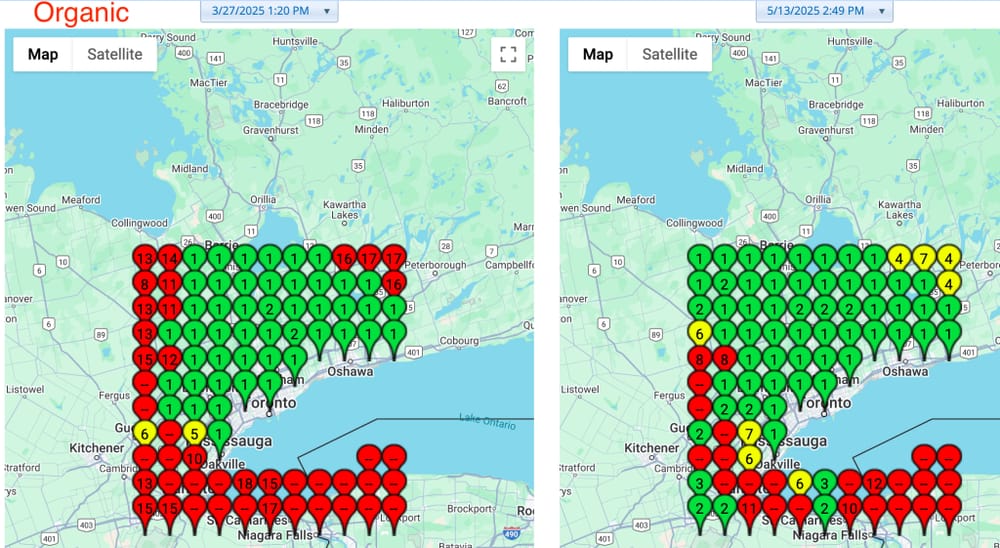
Sterling Sky's testing reflects what many agencies are experiencing anecdotally: when a release is tied to real news or original data, it can create an authority and prominence effect that shows up quickly — especially for local businesses. In one example, a realtor's target landing page saw an 83% increase in traffic over 28 days after a press release was distributed. They also observed improvements in local pack rankings shortly after publishing.
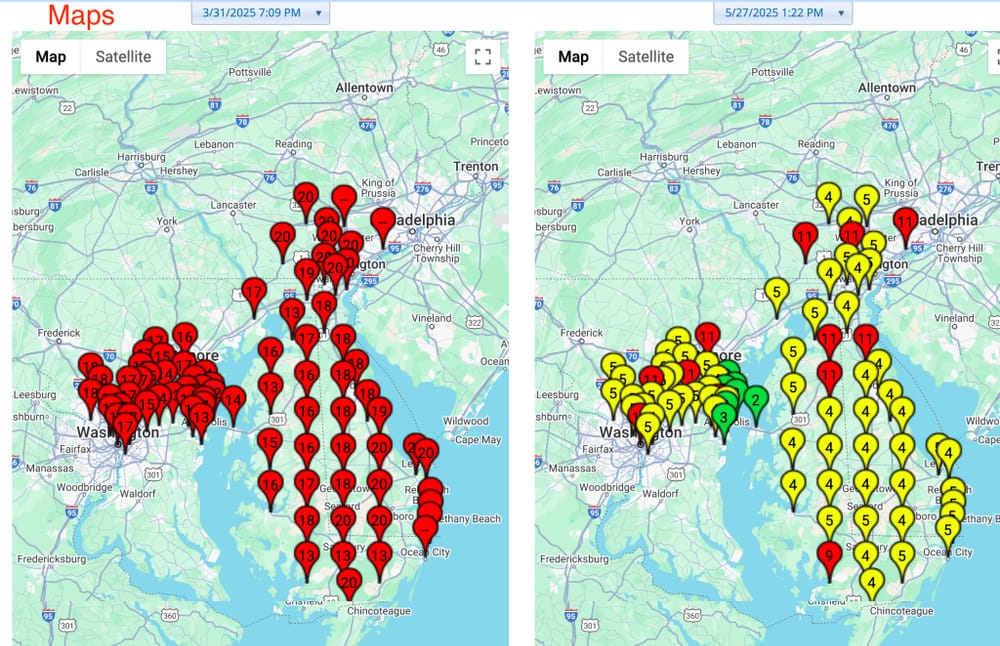
Sterling Sky's test showing local map pack movement following strategic press release distribution — a measurable local prominence signal.
Their most interesting finding, though, wasn't about traffic. In another test, they saw Google's AI Overview for a key service query quote language pulled from the press release — a strong hint that press releases can function as a discoverable source document for AI-generated answers when the content meets credibility thresholds.
When a release is newsworthy and well-structured, Google's AI Overview can pull and cite its language directly — a visibility signal that goes beyond traditional link metrics.
The takeaway for agencies: press releases are re-entering the SEO conversation — not as a shortcut, but as a digital PR asset that can generate citations, mentions, and trust signals across the ecosystem.
Why press releases can help SEO now (even if they do not pass link juice)
1) They expand search real estate for brand and entity queries
Cision notes that releases can increase visibility because they're often indexed across multiple sites — your client's newsroom page plus third-party placements — creating more opportunities to appear in results, particularly for brand-related searches. In some cases, they may also surface in Google News/Discover depending on eligibility and newsworthiness.
For agencies, this is especially relevant when you're trying to protect branded SERPs (own more of page one), reinforce entity associations (brand + category + geography), and push accurate messaging during growth, rebrands, or reputational moments.
2) They support the shift from clicks to citations in AI-driven search
Yoast's 2025 wrap-up describes a broader SEO shift: less focus on pure rankings and more focus on visibility management, where citations and trust increasingly influence what gets surfaced in AI-driven experiences. This connects directly to how AI configuration tools in Search Console are changing the way content gets discovered and cited.
3) They are a gateway to real SEO value: earned coverage
The highest-ROI scenario is not syndication — it's earned pickup: a journalist, industry publication, or local outlet covering the story and linking or at least mentioning the brand. Search Engine Land's digital PR guide frames this clearly: digital PR is about earning online coverage that builds brand visibility, citations, trust, and often backlinks.
4) They can strengthen local prominence signals when executed hyperlocally
Local results are heavily influenced by real-world prominence and corroboration. Hyperlocal PR can earn mentions and trust from community-level sources — signals that can support both traditional rankings and AI-driven visibility. This ties directly to what we cover in How Local SEO Can Help Your Business Stand Out.
The non-negotiable caveat: Google still treats press-release link manipulation as spam
Agencies should be crystal clear here: press releases are not a safe place for keyword-rich anchor text link building.
Google's spam policies explicitly call out links with optimized anchor text in press releases distributed on other sites as an example of link spam. In practical terms: do not use press releases to push exact-match anchors at scale, do not buy distribution primarily to manufacture followed links, and do not treat syndicated copies as a backlink campaign.
The agency playbook: how to use press releases to support SEO (without risk)
Start with real news
Original data, local expansions, awards, partnerships, community initiatives, or differentiated product launches. Newsworthiness drives pickup.
Publish an owned version first
Always host a canonical version in the client's newsroom, then distribute. This gives you a stable URL journalists can cite and a page that can rank.
Write for journalists and AI systems
Specific, factual, easy to skim, quotable, and locally grounded. Sterling Sky's results came from structured content — not generic PR fluff.
Distribute multi-channel
Wire distribution is one channel. Layer on direct journalist outreach, community sites, newsletters, social amplification, and repurposed assets.
Measure what actually matters
Track referral traffic, assisted conversions, brand search demand lift, local pack movement, and earned links and unlinked mentions. One recent Search Engine Land analysis noted that total referral sessions from major LLM platforms are still only roughly 2–3% of Google organic traffic. AI citations matter — but press releases are an add-on to fundamentals, not a replacement for a solid digital marketing program.
What to tell clients
- Press releases do not work as a backlink trick — and trying to force that can create risk.
- They can support SEO by increasing credible mentions, reinforcing brand and entity signals, and earning real coverage.
- In local markets, a strong release can contribute to prominence and visibility lifts — sometimes faster than expected.
- In AI-driven search, clear, credible releases can become a source that gets cited or quoted.
That's modern SEO: authority, corroboration, and visibility across surfaces. For clients building long-term search authority, combining press releases with a strong SEO strategy and consistent conversion rate optimization is the right approach.
Want to build a press release strategy that actually supports SEO?
Ruby Shore builds integrated SEO and digital PR programs that go beyond syndication — earning real visibility across search, local, and AI-driven surfaces.
Sources and further reading
- Sterling Sky: Do Press Releases Help With SEO?
- Cision: Do Press Releases Help SEO: Benefits and Best Practices
- Yoast: SEO in 2025 Wrap-Up
- Search Engine Land: Digital PR for SEO Guide
- Google: Google Spam Policies