
Google Search Console's AI Configuration Tool Is Here: How Marketers Can Start Using It Today
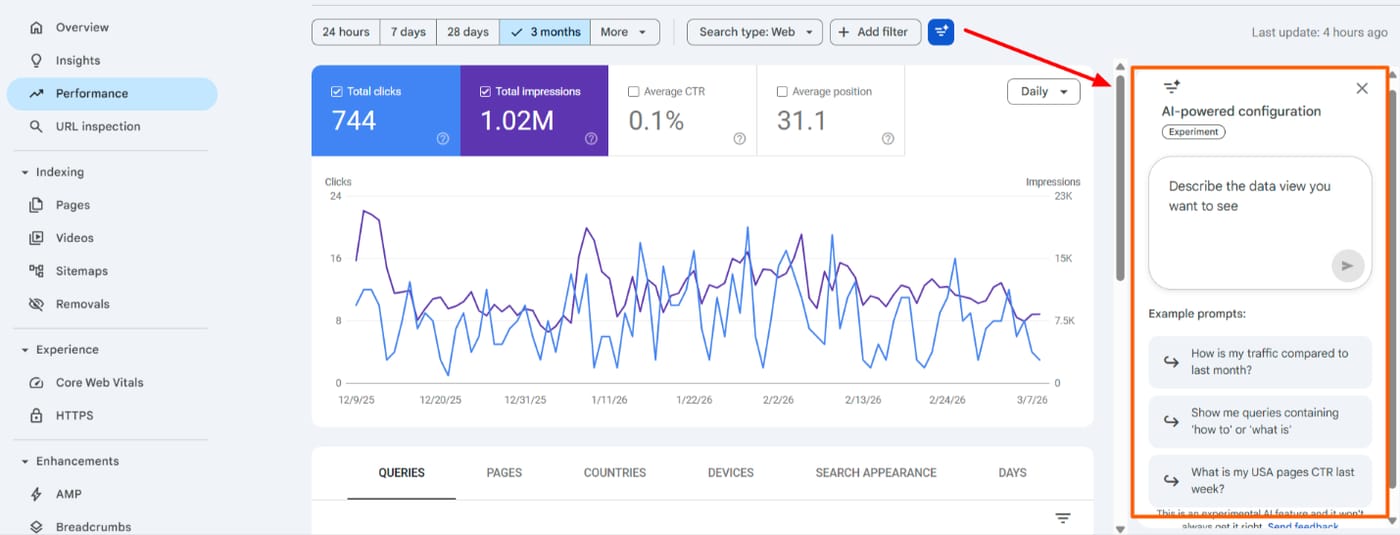
Google has fully launched its AI Configuration Tool inside Google Search Console, giving site owners visibility and control over how AI-driven systems interpret and surface their content. Here's what the tool does and how to start using it strategically.
A client asked us recently why their traffic looked flat in GSC despite publishing more content than ever. Part of the answer turned out to be in a tool they'd never opened — Google's AI Configuration Tool, which had been sitting in their Search Console for months without anyone noticing.
It's a fair thing to miss. Google has shipped a lot of features in the last year, and this one doesn't have a flashy rollout. But for website owners, marketers, and SEO professionals, it's one of the more genuinely useful additions to GSC in a while — because it finally gives you some visibility into how Google's AI systems are actually reading your site, not just crawling it.
For broader context on how AI is reshaping search visibility, see our piece on why ranking in Google AI Overviews matters.
What the AI Configuration Tool Actually Does
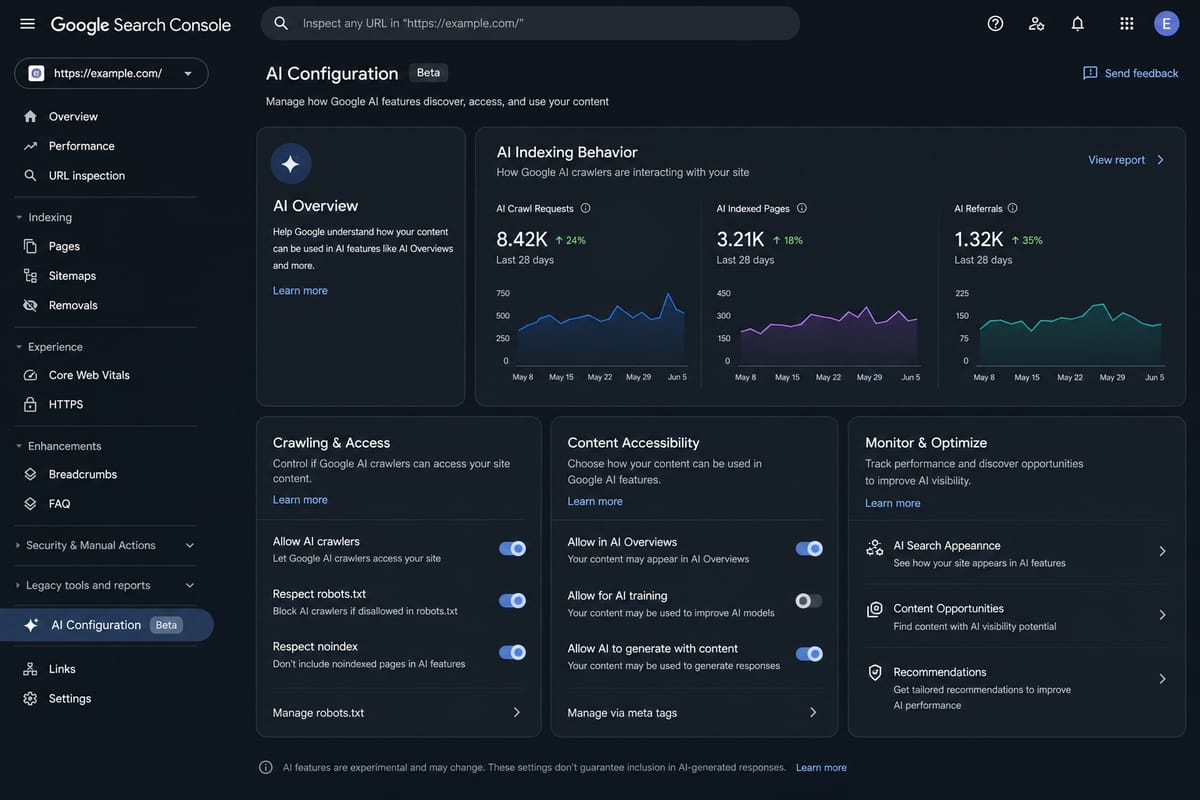
The tool lets website administrators manage how their content interacts with Google's AI systems — not just Googlebot's crawl, but the layer where AI interprets content for features like AI Overviews, generative summaries, and other AI-assisted results.
In concrete terms, it covers four things:
- Managing AI-related crawling permissions for your content
- Adjusting whether and how your content can appear in AI-generated summaries
- Monitoring AI-related indexing signals and behavior
- Identifying which pages are most likely to be referenced by AI-powered search features
The value here isn't that it gives you full control — it doesn't. But it eliminates a lot of the guesswork about how Google's AI systems interact with your site. Instead of inferring everything from organic traffic trends, you get actual data. That's a meaningful shift for anyone doing SEO and digital marketing in the current environment.
Why This Update Matters Right Now
The timing is real. AI Overviews now appear for a significant slice of searches — and getting cited in one is a different thing than ranking in position one. Traditional blue-link rankings and AI-surface appearances don't always correlate, which means the metrics you've been watching may not be showing you the full picture of your content's reach.
For marketers, this tool is one of the first native ways to get ahead of that gap rather than just reacting to it. It's also worth knowing that Bing has been ahead on this front — their AI Performance dashboard already shows publishers how often their content is cited in AI-generated answers. Google's tool takes a different approach but signals the same direction: AI content surfaces need their own analytics layer.
How to Start Using It
If your site is already verified in GSC, access is straightforward — the tool lives inside the existing interface. Here's how we'd recommend approaching it:
Start with your highest-value pages. These are usually your main service pages, cornerstone content, or anything that already drives significant organic traffic. These are the most likely candidates to be picked up in AI-powered results, and they're also the pages where inaccurate AI interpretation would cause the most problems.
Next, check crawling permissions. It's surprisingly common for pages to have restrictions that were intended for traditional crawlers but inadvertently block AI systems too. The tool makes this visible in a way that wasn't possible before.
Finally, use the performance data over time — not just as a one-time audit. The most useful signal here isn't what the tool shows you today; it's the pattern that emerges over weeks as you make content and technical changes. For additional context on reading GSC data, our breakdown of the GSC Branded Queries Filter covers how to separate branded and non-branded performance signals in the same interface.
Best Practices for Content That Performs in AI Search
Using this tool well requires thinking about your content differently. Pages that tend to get cited in AI-driven results share a few traits that aren't always the same as what traditionally drives rankings:
They answer specific questions clearly, without burying the answer in three paragraphs of preamble. AI systems are pulling content to generate answers — pages that are structured to deliver information efficiently have an advantage. This is actually a case where being more direct in your writing is both better for humans and for AI interpretation.
They're structured logically, with clean heading hierarchies and content that flows in a way a reader — or a machine — can follow without getting lost. If your site architecture needs work at that level, our web development team can help you build a foundation that search systems can actually read and rank.
And strong technical SEO still matters — perhaps more than ever. Structured data, clean code, and well-organized content help AI systems understand not just what you're saying, but what category of thing it falls into. For more on how Google's core algorithm has shifted around these signals, see our breakdown of Google's March 2026 Core Update.
The Bigger Picture for SEO Strategy
We're in a period where search has genuinely changed, not just incrementally but structurally. AI-generated results occupy prime real estate. Content visibility is no longer synonymous with ranking position. And the tools available to understand what's happening are just now starting to catch up.
The AI Configuration Tool is part of that catching up. It's not a silver bullet — it won't fix your content or improve your rankings on its own — but it's one of the clearest windows into how Google's AI layer sees your site that you've ever had. Using it regularly, and adjusting strategy based on what it shows you, is the kind of work that compounds over time.
If you want help building a content and technical strategy that accounts for these changes, start a conversation with our team — we work with businesses across industries to stay ahead of shifts like this one.