
Bing Webmaster Tools Introduces AI Performance in Public Preview
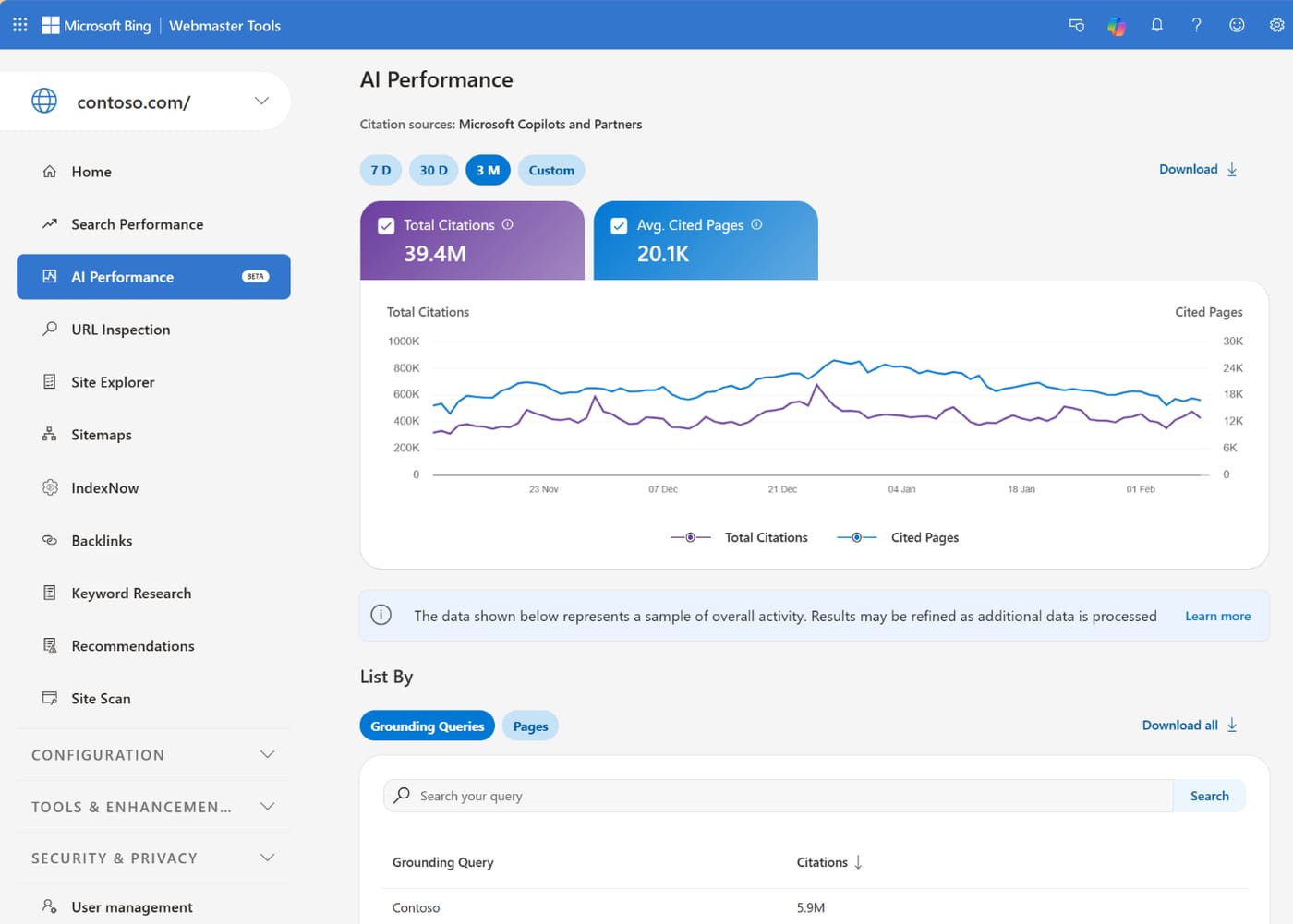
Bing Webmaster Tools has launched AI Performance, a new dashboard that shows publishers how often their content is cited in Microsoft Copilot and AI-generated Bing summaries. It's the first step toward Generative Engine Optimization (GEO) built directly into a major webmaster platform.
Bing Webmaster Tools has launched AI Performance, a new feature that helps publishers see how their content appears in Microsoft Copilot, AI-generated Bing summaries, and selected partner experiences. For businesses and agencies focused on SEO and digital marketing, this marks a significant shift in how search visibility can be measured.
For the first time, site owners can track how often AI answers cite their content, which pages get referenced, and how that citation activity changes over time.
Bringing Search Insights into AI Answers
Bing Webmaster Tools already helps site owners monitor indexing, crawl health, and search performance. Now, AI Performance expands that visibility into AI-generated answers.
As more people use AI to find information, visibility means more than showing up in search results. It also means knowing whether AI systems cite your content when they build answers. This update is an early step toward Generative Engine Optimization (GEO) in Bing Webmaster Tools — and it mirrors what Google is doing with its own AI Configuration Tool in Google Search Console.
What the AI Performance Dashboard Shows
Source: bing.com
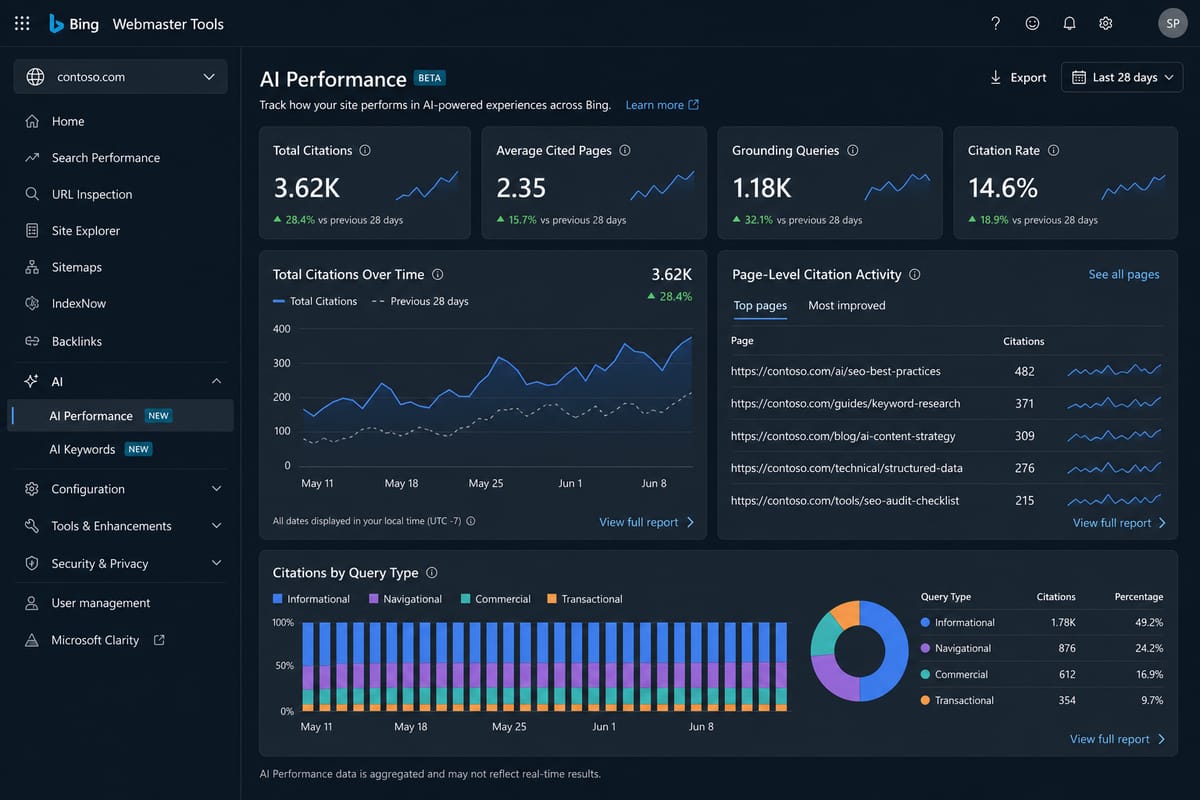
The dashboard provides publishers a single place to review how their sites appear in AI experiences.
It includes:
- Total Citations — How often AI-generated answers cite your content during a selected time period
- Average Cited Pages — The average number of unique pages from your site cited each day
- Grounding Queries — Sample phrases AI used to retrieve content for its answers
- Page-Level Citation Activity — Which URLs from your site AI systems cite most often
- Visibility Trends Over Time — Changes in citation activity across supported AI experiences
Bing notes that these metrics reflect citation activity only. They do not show ranking, authority, or placement within an answer. This kind of data is still new territory — just as GSC's Branded Queries Filter opened up a new layer of search data, AI citation reporting is opening the next one.
How These Insights Can Help
AI Performance helps publishers understand how visible their content is in AI-generated answers. It can help them:
- Confirm which pages AI already uses as references
- Identify content that appears often in AI answers
- Find indexed pages that may need stronger structure, clarity, or completeness
This connects directly to why site architecture and content quality matter so much in modern search engine optimization. AI systems do not just crawl for keywords — they assess whether a page is a trustworthy, well-organized source.
Ways to Improve Content for AI Visibility
Once publishers know which pages and topics AI cites, they can improve content more strategically. Useful steps include:
- Adding more depth and expertise to topic coverage
- Improving headings, tables, and FAQ sections for clarity
- Backing claims with data, examples, and reliable sources
- Updating content regularly to keep it accurate
- Keeping text, images, and video consistent across formats
These best practices also align closely with what Google's core algorithm now rewards. Our breakdown of Google's March 2026 Core Update explains how this shift toward genuine content quality is playing out in organic rankings as well. If your website needs structural improvements to support AI visibility, our web development team can help build the technical foundation that makes your content easier for AI systems to interpret and reference.
Keeping Content Fresh with IndexNow
Fresh content matters in both search and AI answers. IndexNow helps search engines discover when content is added, updated, or removed, making it easier for AI systems to reference the latest version of a page. This is particularly relevant for businesses that publish insight-driven content — keeping articles current is part of how you stay visible in both traditional and AI-powered results.
Why Accurate Business Information Matters
For local businesses, accurate details such as address, hours, and contact information can enhance visibility in AI answers for location-based searches. Bing recommends using Bing Places for Business alongside Bing Webmaster Tools to keep that information updated. This reinforces a principle we cover in the Google Business Profile Playbook — consistent, accurate business information across all platforms is a foundational ranking signal, whether the answer comes from a traditional search result or an AI-generated response.
A Step Toward Greater Transparency
AI Performance provides publishers with more insight into how AI systems use content from the open web. Bing says it will continue working with publishers and the webmaster community to improve visibility, attribution, and inclusion across both search and AI experiences.
For businesses that want to stay ahead of these changes — across both Google and Bing — a proactive SEO and content strategy is essential. If you want help understanding how your site is performing in AI-driven search environments and what to do about it, start a conversation with our team.